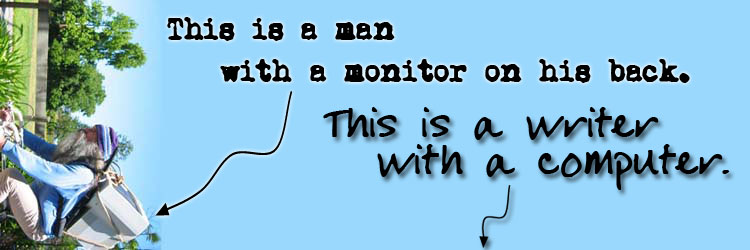
Restrained, elegant prose

“And the writing,” a well-respected writer (published by a real publisher) said. “It flows with restraint. Elegant. A demonstration of showing, but not telling.”

I paraphrase, of course, but I had been waiting for this, for a long time. Not explicitly, of course. Yet, when I read other people’s works, mostly the published work, I feel this itchy jealousy inch up my hands, my arms, my shoulders, my neck, to the tip of my head. It’s green and slimy. And all it says to me, “Why can’t I write like them? why can’t I elevate like them?”

In the past few years, I have learned that I am great at emulating great works. I read a short story or a novel…and with just a sleight of hand, I am able to make a story of my own using the same voice as the writer of the short story. Perhaps it’s angry and obnoxious. A story of drunkenness and losing way. I make it into a similar story of paranoia and losing way. Perhaps it’s the bareness of technology and its impact on humanity. I update the short story to our current age, inserting appropriate devices here and there.

I am stumped by vocabulary. Words slip by me so frequently. Big long words that seem hard to pronounce. For what it’s worth, I scored higher on my math SAT than my verbal SAT, back when it wasn’t cluttered by a composition essay. And so I find myself trapped in the words that I use every day, unable to find myself flowing in a river of letters moving back and worth. But what I have learned is that it’s craft. The heart of writing is about reflecting the emotion and articulating the emotions.

I know how to write dramatic moments well, because I see them like movie scenes. Where the emotions tense up and swell into an explosion in bullet time. The pieces fall so carelessly in all directions, one piece at a time flying and falling, crashing to the ground captured so intricately, so in detail by words on a page.

When I was a teenager

…every year, I thought that it would better. Occasionally, it was. But most of the time, it wasn’t.

And yet, that was my mood at the time. Today I helped out Noelle in her culinary program for teens at the YMCA. I was immediately struck by how social the teenagers were. Some were shy, yes, much like how I was, unable to speak in front of any groups. Some hung around certain peers. Some could barely speak that loudly.

And what I remember the most was the fact that I was a nonpresence. I tried so hard to blend in the background that I was noticeably just not present. Sure, I had occupied an actual space. A 3d object sucking in oxygen and emitting carbon dioxide. Generating energy within. But did others remember me? When I didn’t bother even making an impression?

I had always wondered that through life, especially during that period, where my goal was simply to fit in. To not stand out from the crowd (because I had believed that standing out from the crowd meant ostracization and ultimately never-ending discomfort). But when I got older, the idea that I couldn’t express myself was the reason that I had to change completely.

So as I led the 14 teenagers through various (unprepared) exercises of egg dishes—scrambled, fried, poached, and hard-boiled, I watched their expressions. They were quiet, watchful, and mindful. Was I like that? Did some just blend into the background with all the constant learning just falling over and over themselves into a slew of school?

But I paused when the strawberry shortcake, pasta, and deviled eggs were finished. The teenagers went to find their phones and snapped (for snapchat) with their iPhones. I saw on swipe to find the right filters. And then, I paused to take a photo with my camera app for posterity.

What could I have said to myself in those moments of insecurity? Maybe nothing. Because most of the time the days that I spent as a teenager, I would barely remember decades later.

It needs to be about the journey

The bike ride started as expected. Swing down, flat road, up a short hill, pedal fast, moving, moving, moving. Through the headwind. Through the sunny roads. Pass the cars. Signal left. Signal right. Pedal. Cycle. Shift up. Climb. Plateau. Descend. Shift down. Balance well. Stand up. Fly down. Passing on the left. Passing on the right. Trees. Farmland. Berry land. Just a few more miles. Coastal beauty. Arrive at rest stop.

But then at some point, it became simply the road. A road that kept stretching for more than 60 miles. I had signed up for Strawberry Fields, lured by the promise of strawberries and cream at the end of the ride. Due to my experience on the Cinderella ride, I was immediately intrigued. Great food and a cycling route? I am in! And most of all, I convinced Chris, who had purchased a carbon fiber bike last year with an amazing deal. “You must use your bike for its intention,” I said.

Which obviously were for rides like this.

But then, as Chris zoomed ahead on the flats and my own stamina could not keep up, the feeling of being dropped was suffocating. Sure, I saw the sun, the stretch of coast, the creek underneath the canopy of redwoods, and endless fields of berry bushes. But I also felt the road riddled with pot holes and felts its bumpiness shake through my aluminum frame. I hear the stony voices yell “on your left” or sometimes not at all. Those century riders blazing past me at speeds that I could barely match. And I felt so left behind. That is, until climbs, where I was relatively good at pushing through my own pain and exhaustion…and where I would always catch up with Chris who preferred walking rather than riding. But down the descents where I was paranoid of losing balance and flying off the edge of the road, I slowed, falling behind until the cyclists who I once kept pace disappeared in the distance until they were small blips in my vision like birds passing through the horizon.

All I could hear was my breathing. And yes occasionally, I had moments of runner’s high. But then I would look up at the sky and wonder…did I enjoy this? The crunch of sand rolling with the winds? The pedaling on the roads unknown? I used to run in cross country regularly and began to hate it in graduate school. I began cycling, really only 5 years ago when I borrowed a road bike and more so when friends and I founded a facebook weekend bike group. And yet, here I was, pondering those thoughts of my own exhaustion, I really just wanted to use my skin resurfacing at home and be there already, I was felt totally drained.

But then I reached the end, within reasonable time, where I was offered the promised bowl of strawberries, whipped cream, and chocolate. I indulged in the raw sweet tart strawberries, dunking them into the fluffy cream and the thick chocolate. I ate 7, letting its berryness remind me of why I had signed up for the ride.

“Some people don’t care about UX.”

“Some people don’t care about UX,” he said.

After he said those words, he went on to describe the data behind market research. But for me? I couldn’t hear anything he said. Namely because it sounded uninformed, uneducated, and most of all, ignorant. When he said UX, he meant user experience. The field that I specialized in for more than the last decade.

I countered with the fact that user experience is meant to be seamless. It’s not just graphic design. It’s not what you see on the screen and how you interact with it. Great user experience, and perhaps even product design or experience design depending on the context, considers all areas of impact. It might be the platform (computers that need updates, mobile phones on 4G) or the context of use (lacking great cellular signal, in a hands-free environment). It must consider the right information to deliver, the tasks that need to be completed. And even more so, it needs to be informed by user behavior in the past, present, and the future. It must be informed by repeated behavior, by the way that people navigate through user interface, by the agility of those users, and potential conflicts that exist in this busy world.

And so, I was surprised and not surprised by my sudden intensity. As if he struck my sense of identity and questioned it. But perhaps it was the dismissive way he made the statement as if user experience did it all wrong. My friend called it mansplaining. There was a moment where I wanted to ask, “Did you have a bad experience in regards to the term user experience? Why do you think user experience doesn’t matter? What do you really think user experience includes?” and of course, “why are you saying this? when you know perfectly well that this meetup would include designers?”

But my ear wasn’t feeling sympathetic, empathetic, or compassionate anymore. All I felt was this displeasure that I had felt many times in my career. Where I would need to explain what I do. For most cases outside of my projects, it’s simply “oh it’s just design. it’s to make things easier to use.” Sometimes, I drop the subject when people believe the wrong thing, because it’s not worth correcting. Yet when I am in a safe place where I expect everyone to understand the definition where I don’t have to defend myself or educate people, I am simply appalled and wonder what it means for the future of the industry. There’s a sadness that lies in all of this. That for some people, they don’t care about UX, so that means people like myself…will constantly be devalued. And the skills won’t matter at all.

Escape is…

  • Not being tagged in It
  • Not “assassinated” in the game of Assasins
  • Moving away from your former identity, once shaped by your family and hometown
  • Quitting a job that you had hated for your entire life, but you never realized it…until recently
  • Meditating for 7+ days in the retreat held north of the Bay Area
  • Literally breaking out of prison, like from Alcatraz
  • Breaking free of the bad eating habits that you once had, like McDonalds and KFC every day
  • Leaving a relationship that was not only abusive, but kept you in a plateau for years
  • Moving out of an apartment that you loved, but really had mold growing up in the corners and now you realized that your health is so much better
  • A career that kept you from tapping your potential, whatever that potential actually may be, and that potential often comes in the form of something that is definitely not income-generating
  • Diving deep into fiction, a novel or short story
  • Running a marathon where your mind is only on the completion of the 26 miles, rather than anything from your daily life
  • Being around people who make you feel like you, which you probably never felt previously
  • Becoming self-aware of the things you want and desire simply through the act of writing them down in a moment of brainstorming
  • Eating a delicious snack, which sends you back into the past where you had this special memory of sharing that very same food with a beloved friend
  • Playing a mobile game where you match three-of-a-kind together
  • Attending a college out of state so that you can meet a lot of people who are unlike the people you have known your entire life up to this point
  • Receiving a generous sum of money that allows you to move upward in life and prosperity
  • Tossing out your mobile phone whose notifications had imprisoned you daily for the past year
  • Turning off the email notifications so that you don’t see urgent emails from your boss at 1 am and you feel so dutiful to answer them within 5 minutes
  • Deleting social media apps so that you don’t have to reach out for them when you feel lonely; instead, you sit in that discomfort and you come to understand where it had started
  • Taking risks with something that you had never experienced previously. Everyday.
  • My Ikea Desk

    This desk, purchased when Ikea entered the shores of the Bay Area in Emeryville, when I was a sophomore in college, came to inhabit my first apartment in Berkeley. Tucked against the wall. It endured the fat self-built desktop computer and CRT monitor where I crafted blog posts on scribble, early version of wordpress (aka b2) and browsed the-protagonist forums. It witnessed how I pissed off people and vice versa. It was the DJ table when we decided to have a house party as a retaliation to our downstairs neighbor for being noisy. (Result: it was a bust. as in, it wasn’t really a party at all.) It went to my second apartment in Berkeley, located on the southside, where I spent nights tearing up over a conversation that were simply words on the screen and observed me slack all those two years. It witnessed me preparing my graduate school applications.

    Then it sat in my parents’ garage for two years until I returned to the Bay Area.

    Then I took it with me to San Francisco to my first apartment. As in the first and only apartment. And here it sits in the corner of the room, perfectly sized for it and a laundry. The wood panels are composite and obviously weak. One of the shelves is in my closet, where it has been for the last 10 years. It is still as messy as when I first had it. Random bowls, random pens, random everything strewn around. It endured a LCD monitor, then decreased to only a laptop sitting on its stand next to a keyboard. The blinds look open it where occasionally pigeons flap their wings and squawk outside the window. But it has paid witness to more than half of my life. Well…almost. I have only used it for approximately 13 years.

    Rewatching season 1

    Something special happens when you re-watch season 1. Especially for Game of Thrones. I remember my fascination with the show, not because of the extraordinary world in the story, but because it wasn’t like many fantasy shows. No last-minute saves. Realism persists in the story—good men die, bad men win. Not because of a simple good vs. evil, but rather because of appropriate strategy. Much like a political race.

    I see people who became dead…now alive once again. Some striking innocence and even arrogance, before these characters were forced to transform. So many people. So much time have passed. Scars arrived. Limbs lost. Throats cut. Innocence stolen.

    I wonder this—would I want to know about what happened 5 years ago? Sometimes I don’t want to remember and have completely blocked it from my memory. Emotions may return if I had explicitly described them in detail or marked it perfectly with a single moment, a visit on Foursquare, remnants of a ticket stub, and the like. But sometimes it’s easier to let it steam in its oil until there’s nothing left, except the feelings associated with the people and the objects.

    I wonder what I would think 5 years from now. This moment. Would I remember the departure of a dear old friend to a distant continent likely never to see again? Would I remember the anguish of marketing my book? Would I remember the guilt of not going outside enough, not trying hard enough, not doing enough? Would I remember, perhaps in contrast, the satisfaction of me (or perhaps envy the current good health)? What I didn’t know and what I will know. I will likely think all of this, but I will constantly think if you had only known. But no regrets.

    Because like a TV show, the pleasure of the now having experienced the past is what matters the most.

    Doors

    A door is privacy. It means, “I am here. I am sleeping. I am working. Respect my presence behind the door.” It means that I am focused. That I am alone. That I am having a discussion. It means that I am deep in my thought process. And most importantly, I control this space.

    And yet.

    When I was young, I shared a room with my sister. She was probably 3 or 4, and I was only a year older. We were both scared of nighttime monsters, and so we would calm each other down. “I am here,” I said. “I am here,” she said. At least we would both be eaten.

    But eventually as our parents upgraded the house, we got our own rooms. Separated by a bathroom where we would rush into each other’s room declaring each other’s names. But if my sister left my room without closing the door, I would yell and scream until the door slid all the way closed.

    In college was the only time that a door didn’t exist. I first lived in a quad, literally three other girls and myself. Then in an one bedroom apartment with two girls where I had my bed and desk in the living room, one had both her desk and bed in the bedroom, and another had a desk in the living room and her bed in the bedroom. Then the next year, we somewhat upgraded—I had the living room and she had the bedroom where the bathroom was located. But we went in and out each other’s lives with no door.

    And since then, a door.

    What would a life without a door be like? To know that your fellow members were nearby within reach. To hear the snores. To hear the gossip. To be entwined in a way that we would never know. I am often at peace during the day when in crowds. Especially in public spaces. I am in my own world, but there are people around me. But then when I want to be away from prying eyes, away from eavesdropping ears, and warm bodies, I crave a door. I crave an environment that is wholly my own. As I sleep into my bed, it is silent and controlled the way I want it. Even the noise from the busy streets don’t pierce the space that I have created.

    Memory Fails and Successes

    What did I do in early October 2013? What was I thinking? Why did I do certain things? What phone did I use? Why didn’t I take any photos? What was I most worried about?

    Despite a long history of recording various things online (Foursquare, blog, flickr), in preparation of a potential five-minute storytelling session, I went back to the events of October 2013. Specifically when I was playing Assassins for Come Out and Play. I did win the game later that month, but I couldn’t remember how and who. I remember the hours I spent on 2nd street at the Starbucks watching a building. I remember social engineering my way into a SRO in Union Square and the follow up email that I sent to the game organizer. I also remember how the card slipped out of my pocket while riding and I went back and forth on Valencia to find it, crushed in the pavement 15 minutes later. I searched my email and found some loose artifacts. And even searched my foursquare history. But to no avail.

    I needed the artifacts, the actual artifacts of the game. I couldn’t remember who my second kill was. Was it someone who gave up easily? Did I easily get his card? Did he email me? Was I obsessed with who he was?

    When I got home, I was obsessed with figuring out the mystery. My room isn’t that big and my possessions are rather organized in certain piles. Formal paperwork. Professional books. Ice cream travel guide artifacts. Paper for shredding. Sentimental papers.

    Then I realized how much I loved looking at the artifacts from Assassins. It wasn’t about the fact that they reminded me about the game. But it reminded me about my careful planning, diligence, and…need I say…hunting to win the game. As I went up and down my shelf, I remember how I would stare the cards months later and smile at my glory. Most of my life, all my life, I have rarely won games. I am not physically attuned, so my speed and agility is quite lacking. I would like to think that I am intelligent, but there’s always someone more clever than me. Then the chance games, I never quite feel that I deserve the win because I didn’t quite earn it. So when I gaze on my win for Assassins, I feel pride.

    And then like many things that I lose in my room, I suddenly know where to find it and immediately find it. I remember my motivations and goals immediately as I gaze at the photos. I remember standing in the lobby of stubhub, watching a man with a beard. And suddenly, that pleasure of pride fills me up again. I really did work for this and I did it.