That one night at the opera house

The best first date? Yeah, it was this one. To this day, Chris and I always talk about it endlessly. At some level, we realize that most people wouldn’t appreciate the certain events…and how it demonstrated how we complemented each other, our strengths and weaknesses.

But the point is, I decided to rewrite the entire thing with a bit of flair and reorganization. One thing that I have learned in the past few years in studying the craft of writing is this: a writer’s job is to organize the words on the page.

Which matches my professional (paying) work. Design. It’s not about telling the story as it happened as I quickly wrote in November 2006. Rather it’s to lead the reader down a journey. A reveal at the beginning. A challenge, a question, a curiosity in the middle. Then to an ending that is both satisfying and complete. Whether the characters as portrayed is true or not…is not relevant to the piece. At least in terms of literary work. So I focused on that, trying to bring the scenes and dialogue to life.

An instructor once said, “Who cares about diary entries? They’re the worst. We as the reader care about the journey.”

So that’s what I did. At least I hope that’s what draws people in. Until I realized that the “competition” was more about popularity than quality of the reading (which translates to good marketing copy in the first few lines than a good story). Well, that completely sucks as the winning piece may be of a diary entry or a shallow story that someone famous tells. But I submitted my story anyway in hope.

And this is where I sell out (to nobody): Go and click “recommend”!
I love blank canvases

Because it’s a new beginning.

It’s an invitation to create. From nothing. It’s a place where my brain can finally output in freedom, its colors, its swirls, its magic, its unending rants. The scents of the future and the past can fall right here. The paint from my fingers can drip one drop at a time. Whoosh across the campus and then back again. The grains of the sands of where I have been is sprinkled, no wait, flung from one corner to the other! The taste of sweat as I move quickly across the campus.

The words. The figures. The stories I tell. The souvenirs. The careful placement of objects. The composition of frames, the border, the layers, the dividers.

I hold it all close and stand back to admire it. I press a button. Maybe two. Maybe three. It transforms, rotates, and turns. I filter. I unfilter. I twist a knob. I move a single object. A push. No, two pushes. A nudge.

I twiddle more. My heart falls. My head hurts. The fingers want to rest. It doesn’t work. It doesn’t work.

And now I look, it’s no longer a blank canvas. And this is where I want to stop and start again.

I do aspire to be like the Underwoods

A few days ago, I read a sad secret about how someone felt their relationship was more like roommates than of a couple.

But then again, assuming that roommates are close, is that so bad? Is the insinuation that a couple must constantly have passion, must be full of lust for each other, and must be so ever so integrated?

*spoiler alert if you have never watched House of Cards*

After being spoiled by friends over and over again (stop it, you guys!), I forced myself to finish both seasons of House of Cards. And suddenly, I was in awe. It wasn’t the scheming or manipulation. It wasn’t the endless ambition to Frank’s political goals. It wasn’t the drama within the White House. It was the marriage of the Underwoods.

I would like to have that ideal marriage, Claire and Frank. The “ruthless pragmatism” appealed directly to my Asian frugal sensibilities. It’s not lust that I seek. It’s love and respect. Although I am not seeking power, I am seeking a partnership. A place where we work together toward a goal. Where we share the same value system. Most of all, although I do believe “we always talk to each other”, I was impressed with the line “we never avoid each other”.

I know that it’s a fictional relationship. But is there nothing more powerful than having the number one ally? An ally who would sacrifice themselves for your end game? And how you would do the same? And when you hit major challenges, you get angry and your partner gets angry and you spar, saying things like “figure it out”. There’s no shaming, no guilt-tripping. You send texts with the words, “It is done.” There may be angry moments and manipulation. But then you share the challenges and the nightly cigarette. You say, “We have worked so hard to get here. You and I.” Then the moment comes, and your eyes tell the truth. Your partner comes over and hugs you. You say, “We did it.” You always include the word “we”.

Running is just the worst

It seemed natural at first. There is a reason why our legs exist. There is a reason why we are bipedal. And that’s why running is supposed to be the easiest exercise.

In high school, whether it was for the appearance of student diversity or not, I joined the cross country team. It was the only sport that allowed everyone to participate. There were no tryouts. All I had to do was just…start running.

Back then, I did. I was the slowest, of course. My sister was one of the fastest, quite naturally. But I had endurance and would run miles just at my steady pace. What motivated me was likely not the running itself. It was purely because I had declared my commitment to the sport, because it allowed me to skip my most hated class, PE, and supported some resemblance of social activity (pasta feeds, anyone?) I remember training along the hills near my high school, where I ran past cow poo and trampled hay. I marveled at my own body, which suddenly felt rested with all its energy drawn out during the everyday practice.

Then I graduated. And that was it. I didn’t participate in any physical activity again until I realized that gym membership was included as part of my tuition. Not wanting to miss out on anything free, I went to a few classes. I discovered that I hated yoga. I enjoyed the kickboxing. I felt too timid to even try the machines as I watched dedicated student athletes un-self-consciously show off. Instead, I settled into a routine of me sitting at my computer, typing and watching a screen.

Then graduate school. Again, I discovered quite early on that my tuition included free membership to the campus gym. I swam. I took classes. And this time to bond with classmates, I ran. “Let’s go for a jog!” my roommate would say and we would take off through the local park to campus and back. At this time, I would make myself go…but then I would grumble on the way back, longing for the comfort of my desk and my computer…and all the projects that waited for me.

Then I moved to San Francisco. During the first few years, I would force myself to jog. Up the hills around the neighborhood. I would always want to slow down and creepily study the magnificent houses and their owners. But really instead of pondering how they chose their colors and materials, guilt would overcome me and then I would take off back to my apartment. As I reached my late twenties, I had to admit one thing clearly, I hate running. I hated the way that I moved slowly—that I would still see the same building for more than 30 seconds. I hated how my feet felt against the pavement. I hated how if I stopped running, that I would have to walk and that didn’t change one thing.

When I discovered my love of cycling and the fact that I could coast as much I wanted to coast, I declared one thing: the feet was made only for one thing—to push the pedal.

Today, I wore my yoga pants and a new headband pulling my hair back. My roommate saw me prepare to leave and asked, “Going running?”

“No, I don’t like running. I hate it.”

“But it’s so much fun!” he replied.

But to me, it isn’t. I am not judging the people that do. It just isn’t fun at all to me at all.

A food blog…about what?

My designer sensibility halted me in my tracks. I have always wanted to start a food blog—more to document all the food adventures I have both in the kitchen and traveling. Yes, I did the 31 flavors project, but once I completed it, I was…just confused as where to go from there. And then I thought about a food blog. But I instantly became stuck. What is it really about? How is it different from other food blogs? What’s so special about me that a food blog would make it so worth for someone to read? What do I have to offer others?

Or is it just some self-indulgent work?

It can’t just be a cooking blog. It can’t just be a food travel blog. It can’t be a foodie who happens to be Asian American and loves cooking frugally. It can’t just be a “food life in San Francisco”, because that’s what all bloggers do in San Francisco.

Otherwise, it simply ends up like this blog with a mix of thoughts.

Sometimes I wish that I would blindly dive into projects, but that isn’t me. I need to think about everything holistically, plan for any barriers and challenges, and hypothesize a possible resolution.

Last year, when I was heavily promoting my Kickstarter, I attended several food blogger events. Nearly all the attendees had a food blog. But they struggled with a focus. There are mommy bloggers. There are vegan bloggers. There are former chefs and bakers. But as we all know, there’s only a few that can be successful.

Then again, all of this just got stirred up, because I love the blog from David Lebovitz.

When you have achieved mastery of skill…

You feel complete and satisfied.

You don’t need control. You don’t need power. In fact, power seems silly. Because by being a master, you have already achieved greatness through merit. You have reached this level through diligence and dedication. You know that you are a master.

Once a long time ago, insecurity and doubt consumed you. You had no idea what you were doing. You just knew that this is where you wanted to be. You may have spent hours cowering in the dark corners, shameful of your failures and disasters. The challenges knocked the breath out of you. The climb exhausted every inch of you, but you kept trying even if someone tripped you or an obstacle stood in your way. Tears may have streaked down your cheeks. Your muscles ached so. Your heart breaks, but the following day, the sun rises again and you keep hoping. You may have laid face-down in bed, pounding and wondering why do I do this to myself?

And now, you really have. Others see you in awe. People want you as a mentor. People seek your wisdom and knowledge. They are awestruck by your words. They want the secrets to your mastery.

And you tell them only this: Because I kept trying and I never stopped…

Secret is empowering…and very dangerous

I was enchanted. What can I say?

Almost twenty years ago, I discovered the Internet. Or more specifically, chat rooms. I used to say this as a bio, “If the Internet was not invented, I would not be here.” I meant it truly. Because without it, I would have never developed a voice. I would not have developed an identity and a self-expression that allowed me to be heard. With words…this medium allowed me to speak. Chat rooms paired with my incredible speed of typing allowed the volume of my voice to be heard with everyone else. Loud, quiet, male, female. I could be anyone. And it was so empowering.

But this is not to say that I delved into fake identities and embraced anonymity. I reveled in being me. But now in this medium, I was heard. I was the first one who I knew…who embraced the idea of online friends, online relationships. It was just natural for me.

And yet.

Just recently, I discovered the new medium on the iOS app on Secret. The familiar feelings came rushing back. I have always disliked the image-focused element that dominates the web. Facebook, instagram…and nearly everything else. Twitter barely satisfies that void when my voice is drowned out by everyone else whose reputation supersedes mine.

Suddenly, with Secret, the words I say are equalized in my network. I am as loud as the person next to me. People will pay attention and will pay more attention if they like it. It’s the words itself after all.


Like this secret.

Yet, what’s so alluring is also dangerous. Anonymity allows us to quickly pass judgement. It asks us to judge as we would of a dangerous persona. It prompts us to protect ourselves. It allows our own fears to bubble up without any consideration. And that’s what doesn’t work.

Everyone is afraid

Yesterday as I sat in Samovar (patiently) waiting for a friend to arrive, I listened to the conversations around me. As a tea lounge located squarely in downtown San Francisco, the environment invites…a certain group. There was an Asian couple in the corner, giggling over something a guy was showing on a screen. There was a pair of women, obviously relaxing from a shopping spree around Union Square. Then next to me, parents who was meeting their daughter and a visiting boyfriend. And on my right, a couple…seemingly on their first date.

It’s a place of conversation. With an extensive tea menu, the drinks encourage long, wandering conversations, not burdened by alcohol. No sticky tables, no drunken outbursts, no squeezing by fellow singles here. It’s just the truth. Bare honest truth.

And sitting alone, I somehow was almost bothered. The snippets of conversations that traveled to my ear were very light. Very false. A topic of someone’s company that was acquired. The worry, the general concern that work was going to get tough. The small talk conversation of the parents about what an interesting city San Francisco is. And a woman who seemed to just nod in sync with her date, agreeing with every word. I could sense her intention for the night: I want to give a good impression. Let me be the best that I could.

And my friend re-centered me. Everyone is afraid of breaking their reputation and smearing their self. We don’t want to be seen as a bad person, so we spend energy and effort pretending to be someone amazing, someone awesome, someone strong. We hide our weaknesses in our attitude. Then one day, the charade is done. Our curtain breaks down with a disappointment, a rejection. Sometimes we explode. But really most of the time, we just build it up even more…keep pretending and pretending to be someone we’re not.

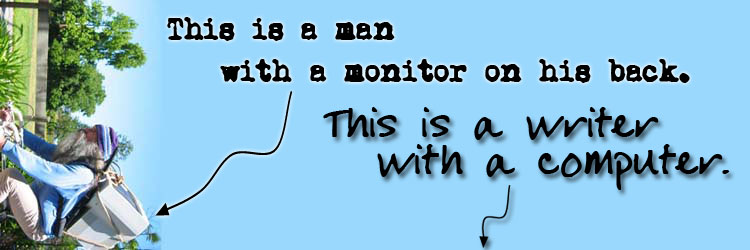
What if you couldn’t see what you write?

What if as the worlds poured out from your fingertips, you couldn’t see what you just put down. Would that change the way you write? Would you rehearse the words over and over again in your head? Would the writing be more clear?

Is it almost like…speech? Where once a word is said, then it is gone. No takebacks. No deletions. No revisions.

I write this as my vision is blurred from dilation from an eye exam. I would have rather opted out, but I wasn’t given an option. And for the next several hours (and hopefully less), I cannot see (clearly) anything close-up. I need to squint to read reads, especially those on screens. But it occurred to me, would it make a difference in writing if I couldn’t see? If I couldn’t mercilessly return over and over again to my work? Would I be less critical? Much like the time that my broke my right hand and had to literally write my left hand (during that semester, my handwriting was horrible and I could never read it). Would I get a free pass?

Certainly not due to the high standards I hold myself up to. But I keep asking myself over and over again. Would I behave differently? Would I question myself if the words never had to go in front of my prying eyes? That the writing that flows out, just simply flows…and it waits until the sun has passed where I can visibly view again for critique?