The oddest pseudo-compliment

In the usual Jenn-like way of resolving conflict, we took a walk outside. We went up the hills, around the blocks, and back around the underpass. Walking much like driving is one of the few activities where two people can be “together”, but not necessarily require eye contact.

I knew this, because she wasn’t comfortable with eye contact. But I liked her innocent, childlike nature. The kind that was giddy and excited. I could see our male colleagues swoon whenever they work with her—her cuteness robbing their hearts.

I wasn’t jealous of that per se. Rather all I wanted was her friendship. At first, it was gossip about work. But it quickly became crushes and non-crushes, dislikes, likes. We imed each other constantly, our words piercing our laptops through gchats, illustrating vivid stories and our mundane lives. I thought we could be really close friends.

And then one day, it wasn’t. I still don’t remember the exact cause. Was it when I balked at a piece of advice and took it to mean that she thought of me less? Was it when I took photos of her on my phone, she immediately shied away? Or perhaps my recommendations appeared like demands rather than a concerned friend? We were angry and we were essentially stomping across the concrete sidewalk.

“Why?” I demanded. “Why this? Why are you so hard to reach?”

I felt my insides crumbling. It felt too painful to fix and yet there we were. I pushed her to answer, unsatisfied with the silence. She said finally, “I don’t like that you make me think so much. It makes me too aware of myself. I learn things about myself that I don’t want to know. It’s uncomfortable.”

Things I learned in Brazil

I have returned from a few weeks in Brazil, and the few things that have stayed with me are the food (from bad to good), the Portuguese (tudo bem?!), the culture, and the bug bites.

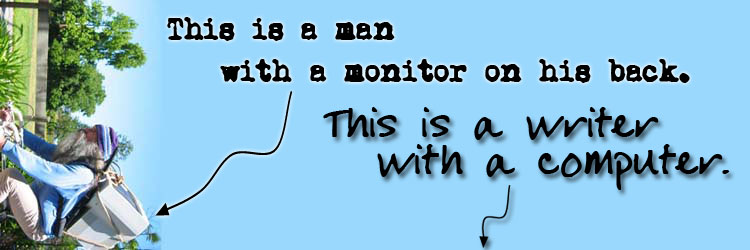
Floating outside Rio's Botanical Gardens

Floating outside Rio’s Botanical Gardens

The trip, of course, reawakened the desire to live abroad. To travel…but then again…

And so here are the things I learned:

  • Acai bowls served in Brazil are nothing like the healthy ones served in the states
  • Acai berries are perishable, so Brazilians get acai frozen just like in America
  • Sucos or juices are everywhere. I love the naturally made ones or ones made from fresh fruit. Why need they be so expensive here?
  • Abacaxi e hortela (pineapple and mint) is my favorite new combination.
  • Del valle is the Minute Maid (possibly even the same company) processed juice of Brazil
  • Kuat!, guarana-flavored soda, is a flavor that you will never anywhere except Brazil (obviously owned by an American company)
  • When I travel abroad, I always miss American-style bathrooms of toilets that flush toilet paper and high-pressure, hot showers
  • Also, when I travel abroad, I miss central AC
  • Bug bites are the biggest souvenir that I brought back
  • Breakfast in Brazil is often eaten at home and rarely eaten in restaurants
  • Sao Paulo has one of the largest populations of Japanese outside Japan
  • Sao Paulo is multi-ethnic, and I frequently see Brazilian Asians who don’t speak a word of English or an Asian Language. They only know Portuguese.
  • Don’t think about manslamming here in Brazil. It doesn’t end well.
  • Be wary of little kids.
  • If you know Spanish, you may be able to get by pretty well in Brazil
  • Sao is a version of “San”. In Brazil, San Francisco is known as Sao Francisco
  • Iguazu falls has more than 200 individual falls
  • The current exchange rate between the American dollar to the Brazilian reai (1:4) instead of the former 1:2 made everything seem cheaper than it actually is
  • Do not buy fruits from mercado municipal in Sao Paulo. The prices are exorbitant even if the fruit is incredibly tasty. I paid $6 USD for one dragonfruit!
  • Never turn down a mortadella sandwich
  • I have no arm strength of kayaking over 9 km
  • Brasilia is an interesting city, but touring it takes only 2 hours
  • A city of the future built in the sixties (aka Brasilia) means that it believed the future was all about car transportation, not pedestrian movement
  • Walking is nearly impossible in Brasilia. I say that now, but it’s so very true
  • Bike rental in Brazil equals poorly maintained bikes
  • Rio locals will always question why you want to visit the favelas
  • The favelas are not as bad as portrayed in media and by the locals, especially when you have a guide
  • Favelas do not have homeless people, because why would they ever live there if nobody can give them anything?
  • Favelas are always located next to the richest neighborhoods, showcasing class disparity
  • People who live in favelas work hard (according to our guide) and never ask for anything
  • If you live in the favela and need something fixed, a directory does not exist. Rather, you just ask someone who knows someone.
  • All wiring, plumbing, construction are done by people inside the favelas and never by someone outside the favelas
  • The gang that controls Rocinha, the largest favela in Rio, is considered a “peaceful” gang. They provide marijuana for the Rocinha residents and cocaine for non-favela dwellers. Rocinha dwellers that get involved with cocaine are severely punished. A generous trade? Perhaps.
  • Pao de Azucar (Sugarloaf) mountain was named such because it sounded like the Inca word for the mountain. Plus the mountain looked like a loaf of sugar when the Portuguese arrived
  • Skin color matters in Brazil. I still wonder what being Asian meant, although the Asians I spotted tended to be like that in American — highly educated, upper class
  • Foursquare is the best for finding highly rated locations when traveling. Don’t use Yelp! It’s never well-used abroad
  • Getting a prepaid refillable SIM card in Brazil is quite cheap. As long as you can figure out the Portuguese. You don’t even need a CPF (the social security number version of Brazil).
  • Buses in most Brazilian cities run frequently and don’t run according to schedule. On the weekends, they sip by bus stops very quickly. Sometimes if Google says that the bus will take one hour, it may be 30 minutes, because very few people ride the buses
  • As expected, Hostels are super social, but they are impossible to sleep in.
  • Just because the architecture is whimsical and beautiful does not mean that you can sleep well in it
  • 2014 Guidebooks are out of date, especially with the listed prices, because Brazil is experiencing issues in the economy
  • Being Asian meant that everyone treated me like a Brazilian. I didn’t feel like a stranger in a strange land.
  • Staying with a host that doesn’t speak English was super delightful as I forced myself to learn Portuguese and use our translator app to converse
  • Brazilians love to rock out at night. Sleep is not an option
  • Like a pre-programmed robot, music will make Chris dance
  • Drivers will not turn on headlights at night to save battery. How annoying and unsafe!
  • Aggressive driving is the only way to stay safe
  • Driving cautiously means potential of rear endings
  • Lanes are narrower in Brazil
  • Brazilians love to cut people off. In fact, it’s not rude. It’s just normal.
  • French cars are popular in Brazil
  • Any America-originated conference held abroad is always the best and international
  • I love ethnography so much and would do it more if its results could be more effective
  • When thinking about a ship, it doesn’t have be a ship that floats on water. What about a rocketship? A jaegar? What about a submarine? Let’s think outside the box here.
  • Ice cream, just as I have learned the last few years, gets people’s attention. Immediately.
  • It is possible to eat too much (see: my experience at an all-you-can-eat Churrascaria in Rio).
  • Estamos en greve means “we are on strike”
  • Striking often means hanging out in front of the business, drinking and playing chess, unlike the method of protest in the states
  • Always say yes. Even though you’re not sure why you’re saying yes.
  • Tango through words

    The curly-haired boy thumps in a dino t-shirt and Nike shorts up from the warm suffocating oven-like downstairs with its childlike stuffed animals to the silent bedroom and the laptops humming on the desk and its surface of wood hidden by tchotkes, and pushes through the piles of watched blu-rays, searching for the quick sale, ignoring the roommate’s questions of unnecessary curiosity, through eBay and Craigslist and ecommerce apps growing on the mobile phone toward the silent girl tapping her fingers on a black cushioned chair and smiles at her and looks at the eyes from the girl at the dining table of his home.

    You stay because you are needed

    “We need you,” they say.

    I falter when I hear that. I hear that I am needed, and my heart tickles. A burst of serotonin has touched my brain, and my reaction is to want more. I want to hear that I am needed, and I’ll do anything to hear people say that again.

    So what I am doing is making people feel like I am needed?

    This is the addiction of work and jobs. The reason why people can’t pull away. They want to be part of something, something greater. And when people call for help, our instinct inside says, go for it, let’s get more of that

    It’s risky, because I know that it’s not what I want. But then I hear that I am needed, and I stay. How can I deny that they appreciated me? How can I say that I don’t want to help you anymore? How can I deny that people would suffer if I wasn’t there? There’s a superiority complex and unhealthy dependency at play.

    I see it clearly. But I say that I will go. Eventually.

    My relationship with sugar

    “That’s not a vice!” a manager after I told him my only vice: sugar.

    I always recount that moment, because I felt embarrassed that I had no deep dark secrets like smoking, drinking, or porn. Nothing that the public would be happy to shame without regard to individuality. Sugar? Everybody does it.

    But earlier this year, I agreed to help out a startup where I knew some people from previous gigs. It fulfilled one of my requirements for freelance jobs: working with people I know. And it also fulfilled another important one: impacting people beyond the 1% (at least in the near term).

    Their pitch: We help people with chronic conditions. Starting with diabetes.

    Going into this, I barely knew anything about diabetes. Beyond what I know that Stacy from The Babysitters Club endured. Yes, my grandmother did pass away due to complications from diabetes and my grandfather did have type 2 diabetes for the longest time. But I didn’t know much beyond besides the fact that during special dinner, my mom would say “just have a small piece of cake” to my grandmother. Just a little bit.

    And so I dived into the project. Because of my role, I spend hours upon hours talking to people with diabetes. I ask them who they are, what they do everyday, and why do they do that. I take time to understand their choices, their behavior and their motivations. And in it, I hear cries of help, sadness, but hope always for the future.

    One said to me, “I want to live happily for the next decade. I don’t want to be an old person.”

    Silently with a sympathetic smile, I nod. I can’t truly empathize beyond understanding now what my grandparents had to suffer.

    But then all the words, all the statements, all the facts that I learned start touching what I do everyday. In food, I always believe in moderation. I don’t believe in diets. I believe in enjoying what we eat—it should be treated as a pleasure of life, a privilege of being human. Yes, have that piece of candy. Yet, have that piece of cake and ice cream. I believe in savoring delicious food, to extend its lifespan as much as possible on the tongue. I believe in eating slow and being choosy about ingredients.

    I have always rejected the guilt that comes with food. Just eat what you like and don’t eat what you don’t like. But perhaps that’s the rub. I have rarely loved bread or even most carbs. Nowadays too, I don’t like the sweetest things, the syrupy headache-inducing things. I love things that are sweet and fresh. Juicy and fruit.

    But learning about diabetes and becoming aware of how my body reacts, because that’s what these people do. They feel the sweats, they feel the exhaustion, they feel the headaches when their glucose levels are too high and low. I am moving beyond sympathy and can feel it in my body. And the worry increases. Maybe I will pass out too? Maybe I will have a seizure? Maybe I won’t be able to see?

    There’s a phenomenon for this, of course. The kind that doctors regularly get when they listen to their patients. Be cold and distant is probably a defense mechanism. But I can’t do that. In talking to people with diabetes, I want to be warm and welcoming (unless of course, they’re tricking me and pretending to have diabetes just to be part of the studies). So I am there, listening, constantly listening. Then I eat and think: did I eat too much? Will my pancreas fail on me?

    But my head feels fine. I see vividly. And the tiredness is due to the heat or probably working all day. I am okay, right? I am okay.
    My dad’s first rideshare

    “Maybe stand over there,” I said, pointing at the balcony that overlooked the lobby of city hall. “We need more candid-looking photos.”

    My sister and her fiance looked over the railing. I pressed the shutter button. *Click* *Click*

    Then I heard a familiar voice come up behind me. “My car got towed,” my dad said. “I need your help. It’s at Mcallister and Market.”

    I gave the camera to my sister and told them that we’ll have to meet them at the restaurant. I started walking down the stairs and started asking questions. Is that an intersection? Is that where all city government towed vehicles go? What would get your car towed? Aren’t we usually very careful about parking in the city? How was that possible?

    My dad explained that he called the number posted on the sign. He didn’t know why the car was towed. I listened to it and got lost in the complicated numbers. Then he asked the security.

    “I don’t think that there’s a garage at McAllister and Market,” I said. “I know where the impound lot is.”

    How can anybody not miss the snazzy Autoreturn lot across from the Hall of Justice off of Bryant. Not only did it have a well-designed logo that suggested that the service of getting towed was swift and happy, but it suggested that people got their cars in a happy fashion.

    I pondered asking Chris to drive us there, but time was not on our side. And unfortunately Lyft was not on my windows phone so I called an Uber. With calmness, I led my dad to the car and I accepted the surge charge. My dad never had experienced a rideshare and slipped into the front seat. I chatted briefly with the driver who expressed sympathy at the situation. And we arrived at the building. Bulletproof glass greeted us. It separated the common folk and the workers. Nobody else was there beyond the employees. My dad rushed to the open window, explaining his plight—he was there to see his daughter get married and he didn’t see any signs that would suggest that a car was towed. “There’s nothing you can do,” I whispered. “I learned this from a friend. You can’t plea here. You can only plea in court. The best thing to do is pay the fees and get out of here. You might be able to get the fees reversed later.”

    And so the fees were paid and a man handed us a slip through the bars to get the car. Everything was in perfect condition, a newly purchased car that my dad proudly chose a month prior sat among other law breaking cars. A ticket sat underneath the windshield blades. “I can’t believe it!” he exclaimed.

    “Maybe you can argue in court,” I said. “That’s the best thing you can do. But the best thing right now is to return to where you parked and determine if there was a mistake in the ticketing.”

    with guidance from Waze, we returned to the scene…of the tow. I stood in middle of the former parking spot, examining all angles. The sign at the front, the sign at the back, the meter. But there was nothing. I waved my hands in defeat. From every angle, the sign clearly stated no parking between 3 and 7 pm. The anti-gridlock laws of San Francisco. “I didn’t know,” my dad repeated. “We got here before 3 pm and we have a handicapped sign because your grandmother came with us. I didn’t know that we couldn’t park there.”

    I sit on the caltrain

    After more than three years of commuting on the caltrain to various jobs, I have gotten used to it. It’s how I sleep, how I pack in my writing time, the method by which I catch up on Twitter and Facebook, browse endlessly on articles, fill up on people watching.

    It is my time. But there’s still part of me that hates it. The fact that I am stuck on a metal tube hurtling down and up the peninsula to a career far, far away. But the thing is people have done these for years, for decades even. Popular in the east coast to move from state to state. To be the bridge and tunnel people. But in this modern era, I am the road warrior, on a train, among the hordes of young professionals headed to an open office layout full of snacks and drinks and treadmill desks.

    I never see people my parents age on the caltrain. Perhaps because I take the rush hour trains—the ones that stop every 15 miles or so, skipping the stations with little demand.

    This morning though, there was a woman, wrinkly skin, oozing anxiety about finding her stop and understanding how the train worked. We were in the bike car, so everyone was a cyclist hoisting bikes and helmets, except for her of course where she filled a nearby seat with Caltrain material—the schedule, the announcements, etc. She asked questions to a nearby passenger and responded to each answer with a grateful “Oh thank you so much”. In between the lines, I heard I appreciate that you listened to little old me, I don’t know how I could survive this day, it’s scary to me

    Sometimes I wish that I wasn’t filled with so much apathy, sometimes turning into cynicism and self-righteousness, as I ride this train. Having embodied all the social mores of riding the train. Get up before the stop. Say as little as possible. Don’t stare. There’s a strangeness in this because it’s as if we’re together, but we’re not. I don’t even know who is riding with me, except for the recognized bags, the jackets. Occasionally, I see someone I know. But the whole ride up and down, I am silent, save for the “excuse me” when I bump into someone. Keep eyes down, get off the train as quickly as possible, exit. And whoosh, the passengers leave the car, walking to the exits, arriving faster there than by car.

    Of babies and having them

    As she approached, I realized who she was—the girl from a birthday bonfire. She and I agreed through a Facebook group message to help our friend prepare for Burning Man by testing their shade structure. She and Chris were crying materials over to the spot we found at the panhandle. I grimaced upon recognition. I helped everyone move things into place. Then we paused as we took a break from the moving. “Hi, my name—” she said and stretched out her hand.

    “We met earlier,” I said and then the words slipped out. “No babies.”

    “No babies?”

    “Yes,” I said and could not stop. “That’s what I remember the most about you. You don’t like babies.”

    “Oh you mean having them? That’s a weird thing to remember”

    “Yes…” I said and shifted the subject. “Hey, how shall we get started?”

    But the slight bitterness stayed with me as I recalled her criticism of people having kids. We were talking about a mutual friend who couldn’t make it because she gave birth recently. “Why would you want to lose your freedom?” she said aloud to nobody in particular. “You can’t travel. I don’t think that it’s good. I can’t believe that they decided to have them. I love my life and think that other people shouldn’t have to give that up.”

    I was silent then at first. “People change and want different things,” I mused, but I could feel a twist inside.

    “Yeah,” she said and turned to me. “Why would anybody destroy their lives like that?”

    I ate a marshmallow then, stuffing my mouth so I wouldn’t say anything more. After the bonfire, that’s all I could talk about. It was the second time in less than a year that I heard anti-children sentiment from people. And this time, it stayed with me.

    On the panhandle, we hauled and hammered rebar, stretching pipes across them, and throwing tarp over the pipes. And as we did that work, a small child wandered over, curious about the construction. He barely reached my knee and said nothing. His strut was awkward and unrefined. He outstretched his hands and his mother asked whether he could play.

    “Come and place your hands on that pipe,” I said.

    He didn’t really quite listen to me, but he placed one hand on a pipe. His face collapsed into a big smile and chuckles fell out. “There you go!” I cried as I lifted the pipe and his hand “pushed” it upward. “Wow, we really needed your help. Thank you so much!”

    The boy jumped up and down, clapping. “Thank you,” his mother mouthed as the boy ran back to her.

    “But then we can eat everyone together!”

    Chris tells me this, without any pretension.

    “I don’t know if I want to be a zombie,” I say.

    I have thought about this carefully. That one day, I would want to sign a DNR order. That in case of the zombie apocalypse, perhaps caused by a vegetarian type food like quinoa, I would prefer to survive. And if bitten, I would rather die than to cause others the pain of my own bites. Chris said that he would join me. “Wouldn’t it be great if we were eating people together?” he says.

    “But then I wouldn’t be myself,” I say, thinking of rotting skin and my mindless head, devoid of any of the Jennifer personality beyond the general weak constitution.

    “Okay,” he agrees. “But just believe me when there are zombies. Don’t disbelieve me like all those characters on TV and movies. Believe me when I say that there are zombies. We will need a safe word.”

    “Okay.”